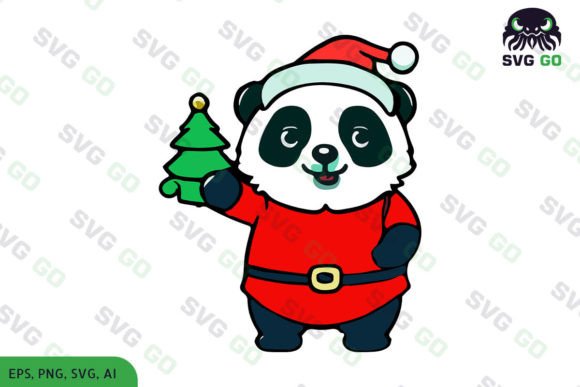
Panda Clipart Christmas Sublimation: A Designer's Review
As a designer who spends more time staring at stitch maps than most people spend on their phones, I approach every new machine embroidery design with a healthy dose of skepticism. We've all been there: you download a file that looks adorable on the screen, only to find out it's a tangled mess of underlay and poorly digitized corners once it hits the fabric. That is exactly why I took a close look at Panda Clipart Christmas Sublimation. While the title suggests a sublimation workflow, my interest lies in how this illustration translates into thread for tangible, handmade products. Does it hold up under the needle? Is it viable for a small shop product line? Let's dig into the practical reality of using this asset.
First Impressions: Mood and Visual Personality
The moment you pull up the file, the mood is unmistakably cozy. There is a gentle, whimsical quality to the panda character that fits perfectly within the current trend of "kawaii" holiday decor. The lines are clean, suggesting a vector-based origin typical of high-quality Illustrations. For an embroidery project, this is crucial. Clean lines usually translate to smoother satin stitches and fewer jumps. The composition feels balanced, not overly cluttered, which is a green flag for anyone working with limited hoop sizes.
However, the term "sublimation" in the title gives me pause. Sublimation designs often rely on gradients and soft blends that do not exist in the world of thread. If this file is purely a raster image intended for printing, it requires significant digitizing work before it becomes a usable embroidery file. If it has already been digitized, the key will be seeing how those soft edges were handled. Did the digitizer use a running stitch for outlines or a tight fill? The visual personality screams "holiday gift," specifically for baby embroidery or boutique nursery decor, but the technical execution determines whether it stays a concept or becomes a finished product.
Real-World Application: The Holiday Tote Scenario
To truly test the viability of Panda Clipart Christmas Sublimation, I imagined a specific real-life scenario: preparing a run of custom embroidered tote bags for a local craft fair. Tote bags are popular, but they present challenges like texture and potential stretch. I envisioned placing this panda design on a natural canvas bag, perhaps adding a personalized name below it in a complementary script.
In this context, the design shines as a focal point. The panda's shape is distinct enough to be recognizable even from a distance, which is vital for booth displays. For an Etsy seller or creative entrepreneur, this kind of clear imagery drives buyer engagement. Customers scrolling through listings need to instantly grasp the theme. A cute panda wearing a Santa hat or holding a candy cane (common tropes in this niche) creates an immediate emotional connection. It says "handmade" and "thoughtful" without needing a paragraph of description.
If I were producing these for a client, I would likely treat this as an applique design opportunity. Cutting a piece of red felt for a scarf or hat on the panda could add texture and reduce stitch density, making the final item more durable. This approach elevates the perceived value of the finished product, allowing a craft business owner to charge a premium for what might otherwise be a standard sweatshirt embroidery job.
Navigating Technical Challenges and Fabric Choices
Every design has its kryptonite, and for a character-based illustration like this, it's often the small details. When evaluating Panda Clipart Christmas Sublimation for actual stitching, several factors demand careful attention:
- Fabric Texture: On a fluffy towel or a thick knit sweatshirt, fine details can get lost. The panda's facial features need sufficient spacing. If the eyes or nose are too close together, the threads may merge into a black blob after washing.
- Stitch Density: High-density fills can cause puckering, especially on stretchy fabrics like t-shirts or baby onesies. If the original design is dense, I would advise reducing the fill density or switching to a lighter weight stabilizer to prevent the fabric from warping.
- Curved Surfaces: Applying this to a cap is tricky. The front panel of a hat is curved, and wide designs can distort. If the panda is too wide, it might wrap awkwardly around the curve. A centered, vertical orientation usually works best for caps.
- Dark Fabrics: If stitching onto a navy or black garment, the white areas of the panda need a solid underlay. Without it, the dark fabric will peek through, ruining the crisp look of the illustration.
It is also worth noting that if you are adapting this from a sublimation graphic, you must manually assign stitch types. You cannot simply import a JPEG and expect magic. You will need to decide between a satin stitch for the borders to give a shiny, defined edge, or a fill stitch for the body to create a matte, plush look. A mix of both often yields the most professional result.
Commercial Viability and Brand Consistency
For those running a craft business, consistency is king. Using Panda Clipart Christmas Sublimation across a range of products—pillow covers, tea towels, and aprons—can help build a cohesive holiday collection. The versatility of the design allows it to fit into various niches, from nursery decor to adult novelty gifts. However, brand consistency relies on quality control. If the stitch count is too high, production time increases, eating into margins. If the thread colors are non-standard, sourcing becomes a headache.
Before listing this as a digital embroidery file or selling items made with it, you must verify the licensing terms. Just because a design is available for download does not automatically grant commercial rights. Many designers protect their design assets strictly. Ensure you have the right to sell the physical handmade product or the digitized file itself. Nothing damages customer trust faster than a copyright strike or a takedown notice on your shop.
Practical Notes for the Studio
If you decide to move forward with this design, here is my checklist for ensuring success:
- Test on Scrap: Never skip the test stitch-out. Use the exact fabric and stabilizer combination you plan to use for the final item.
- Check Contrast: View your test stitch in black and white. If the details disappear in grayscale, the contrast between thread colors is insufficient.
- Verify Hoop Size: Confirm the design fits your available hoops without needing excessive re-hooping, which introduces alignment errors.
- Inspect Small Details: Look closely at the panda's ears and paws. Are there tie-offs that might snag? Is the underlay visible?
- Wash Test: Run the sample through a wash cycle. Does the design pucker? Do the colors bleed? This is critical for items like baby clothes or kitchen towels that see frequent laundering.
In conclusion, Panda Clipart Christmas Sublimation offers a charming aesthetic that resonates well with the current market for personalized holiday goods. Its success, however, hinges entirely on the technical preparation. Whether you are digitizing it yourself or purchasing a pre-made version, treating it with the rigor of a professional embroidery project will ensure that the final result is not just cute, but commercially viable and built to last. For the observant maker willing to tweak density and choose the right stabilizer, this design could easily become a bestseller in your winter catalog.