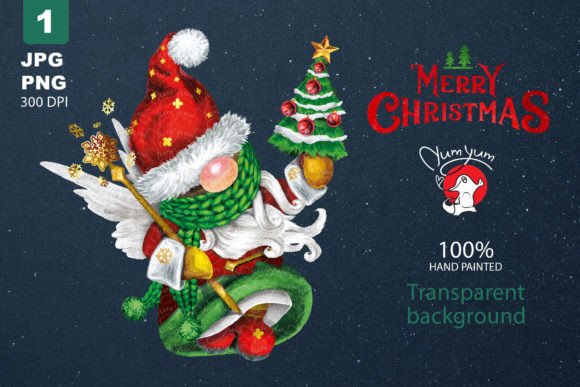
Dwarf Christmas Angel: A Designer's Review for Holiday Projects
As we approach the peak season for holiday crafting, the pressure to find unique, high-quality machine embroidery design assets increases. I recently took a close look at the Dwarf Christmas Angel, a piece categorized under Illustrations, to determine if it holds up under the scrutiny of real-world production. When you are running a craft business or managing an Etsy seller storefront, you cannot afford designs that look good on a screen but fail on fabric. This review breaks down how this specific design performs when translated from a digital embroidery file to a tangible finished product.
First Impressions and Visual Personality
The first thing that strikes me about the Dwarf Christmas Angel is its whimsical yet grounded aesthetic. Unlike generic, overly sanitized holiday graphics, this illustration carries a distinct personality. The lines suggest a blend of traditional folklore with modern charm, making it versatile enough for both rustic and contemporary handmade product lines. The layout appears balanced, with a focal point that draws the eye immediately to the character's expression.
For designers, the mood is crucial. This design evokes warmth and nostalgia, which is exactly what customers seek in a personalized gift during the holidays. The level of detail suggests a thoughtful arrangement of satin stitch outlines and fill stitch areas. However, visual appeal on a monitor does not guarantee stitching clarity. The true test lies in how these illustrative elements translate into thread, especially when dealing with complex shapes and potential color transitions.
Real-World Application: The Custom Tote Bag Scenario
To evaluate the practical utility of the Dwarf Christmas Angel, I envisioned a specific project: a custom embroidered tote bag for a boutique client. Tote bags are a staple small shop product, but they present challenges due to their often coarse fabric texture and the need for durability.
In this scenario, the design would serve as the centerpiece of a holiday collection. The illustrative nature of the angel fits perfectly on a canvas tote, where larger stitch areas can shine without getting lost in the weave of the material. If executed correctly, this tote bag design could become a signature item for a brand, enhancing brand consistency and buyer engagement. Customers are more likely to trust and purchase items that display crisp, professional stitching rather than puckered or messy threads.
Beyond totes, this design shows strong potential for sweatshirt embroidery. The cozy theme aligns well with winter apparel. When placed on a fleece or cotton-blend sweatshirt, the Dwarf Christmas Angel adds a touch of whimsy that elevates a basic garment into a festive statement piece. For custom apparel decorators, the key here is ensuring the design scales well. A large back print allows for full appreciation of the illustrative details, while a smaller chest logo might require simplifying certain elements if the original file is too dense.
Navigating Fabric Challenges and Stitch Density
While the design is promising, there are critical areas where caution is required. Any embroidery project involving detailed illustrations must be assessed for stitch density. If the Dwarf Christmas Angel relies heavily on dense fill stitches to create shading or depth, it may cause stiffness on lighter fabrics or lead to puckering on stretchy materials like t-shirts or baby clothes.
For baby embroidery, softness is paramount. Before using this design on a onesie or blanket, I would strongly advise testing it on scrap fabric of similar weight. You may need to adjust the pull compensation or reduce the density in the software if the license permits editing. Similarly, when working with dark fabrics, the thread colors chosen for the angel must provide sufficient contrast. A lack of contrast can muddy the details, turning a charming illustration into an indistinct blob.
Curved surfaces, such as caps or hats, present another hurdle. The structural integrity of the Dwarf Christmas Angel must be maintained when stitched over a curved plane. If the design has wide horizontal spans, it might distort on a cap front. In such cases, using a sturdy stabilizer is non-negotiable. For textured fabrics like towels or aprons, a water-soluble topper can help prevent stitches from sinking into the pile, ensuring the running stitch details remain visible and sharp.
Commercial Viability and Brand Value
For commercial embroidery professionals and digital product sellers, the value of a design extends beyond its aesthetics. It impacts product value and customer trust. A well-executed Dwarf Christmas Angel on a pillow cover or kitchen towel signals quality craftsmanship. It tells the buyer that the maker cares about the final presentation. Conversely, a design that frays or loses definition after a few washes can damage a reputation quickly.
This design fits well into various niches, from holiday embroidery collections to year-round nursery decor if the color palette is adjusted. For those creating printable mockup assets or marketing materials, the strong silhouette of the angel makes it highly recognizable even in thumbnail images, which is vital for online marketplaces. However, remember that a mockup is only a promise; the physical finished product must deliver on that promise.
Essential Designer Notes and Best Practices
Before committing to a production run or listing this as a new item in your shop, consider the following practical steps:
- Test on Scrap First: Always stitch the Dwarf Christmas Angel on a scrap piece of the actual fabric you intend to use. This reveals issues with tension, density, and registration before you ruin good material.
- Check Thread Contrast: Evaluate the design in black and white or grayscale. If the details disappear, you may need to swap thread colors to ensure clarity.
- Verify Hoop Size: Confirm that the design fits within your available hoop size without requiring excessive re-hooping, which can lead to alignment errors.
- Inspect Small Details: Look closely at tiny elements like facial features or wing tips. These areas are prone to breaking or merging if the stitch count is too low or the spacing is too tight.
- Stabilizer Selection: Match your stabilizer to the fabric. Heavy cut-away for knits and stretchy fabrics, tear-away for stable wovens, and water-soluble for piles and loops.
- Licensing Confirmation: Since this is a commercial asset, double-check the license terms. Ensure you are permitted to sell finished physical goods or if there are restrictions on selling the embroidery file itself.
Ultimately, the Dwarf Christmas Angel offers a compelling option for designers looking to add character to their holiday lineup. Its illustrative style bridges the gap between art and craft, provided it is handled with technical precision. By respecting the limitations of the medium and preparing adequately, you can transform this digital asset into a cherished personalized gift or a best-selling small shop product. Always prioritize the quality of the stitch over the speed of production, as the longevity of your brand depends on the excellence of every single thread.